
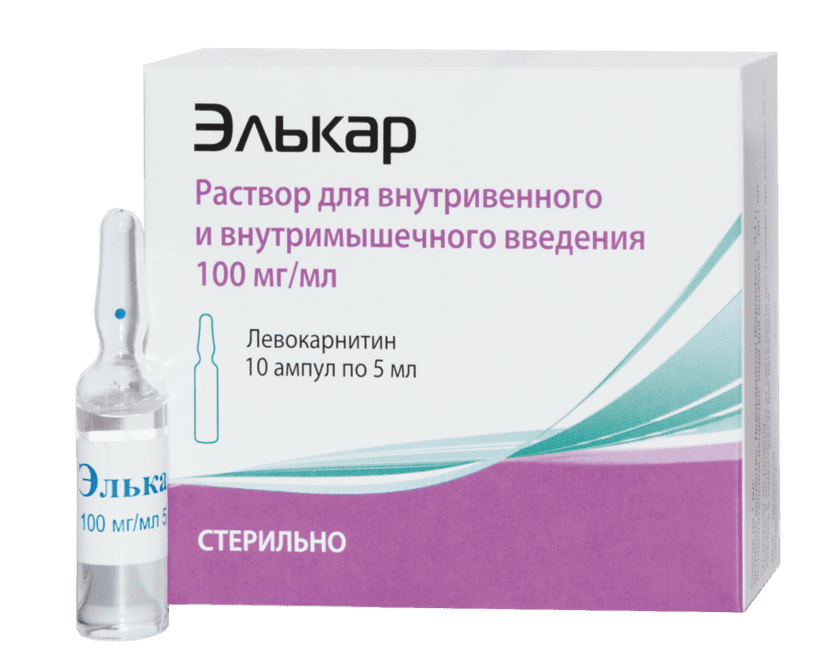
Composition: Active ingredient: levocarnitine (carnifit) 0.1 g. Excipient: water for injections up to 1 ml.
Form: Solution for intravenous and intramuscular injection
Indications: Elcar is used as part of combination treatment for acute hypoxic conditions (acute cerebral hypoxia, ischaemic stroke, transient ischaemic attack). It is prescribed in the acute, subacute and recovery periods of cerebrovascular disorders; for dyscirculatory encephalopathy, various traumatic and toxic brain injuries, and recovery after surgery. It is indicated in primary and secondary carnitine deficiency, including patients with chronic renal failure undergoing haemodialysis; cardiomyopathy; coronary heart disease (angina, acute myocardial infarction, post-infarction conditions); hypoperfusion due to cardiogenic shock and other myocardial metabolic disorders.
Contraindications: Individual intolerance, pregnancy and breastfeeding (data on the feasibility and safety of use during pregnancy and breastfeeding are currently unavailable).
Dosage: One ampoule contains 0.5 g of active ingredient. Elcar® is administered by slow intravenous infusion, intravenous injection over 2–3 minutes, or intramuscularly. Before intravenous administration, dilute the ampoule contents in 100–200 ml of solvent (0.9% sodium chloride or 5% dextrose/glucose solution). Acute cerebrovascular disorders: 1 g/day (2 ampoules) for 3 days, then 0.5 g/day (1 ampoule) for 7 days. After 10–12 days, repeat courses lasting 3–5 days are possible. In the subacute and recovery periods, dyscirculatory encephalopathy, various brain injuries and carnitine deficiency: 0.5–1 g/day (1–2 ampoules) intravenously (infusion or injection) or intramuscularly (2–3 times daily) without dilution for 3–7 days. If necessary, repeat after 12–14 days. Slow intravenous administration over 2–3 minutes: for secondary carnitine deficiency during haemodialysis, 2 g (4 ampoules) once after the procedure; for acute myocardial infarction or acute heart failure, 3–5 g/day (6–10 ampoules), divided into 2–3 administrations during the first 2–3 days, followed by halving the dose; for cardiogenic shock, 3–5 g/day (6–10 ampoules), divided into 2–3 administrations until the patient recovers from shock. Subsequently switch to oral Elcar®.
Side effects: Allergic reactions, muscle weakness (in uremia), vein pain with rapid injection.
Interactions: Glucocorticoids enhance tissue accumulation (except in the liver), anabolic steroids enhance the effect.
Warnings: Prescribed by a doctor. Rapid injection may cause vein irritation. Switching to oral form after injections is possible.
Pregnancy: Contraindicated during pregnancy and breastfeeding.
Country of origin: Russia
Manufacturer: PIK-PHARMA
Storage conditions: Store in a place protected from light at 15–25 °C. Keep out of reach of children.
Doctor, 2018
Authors: L. Chichanovskaya, O. Bahareva, K. Sorokina
Read