
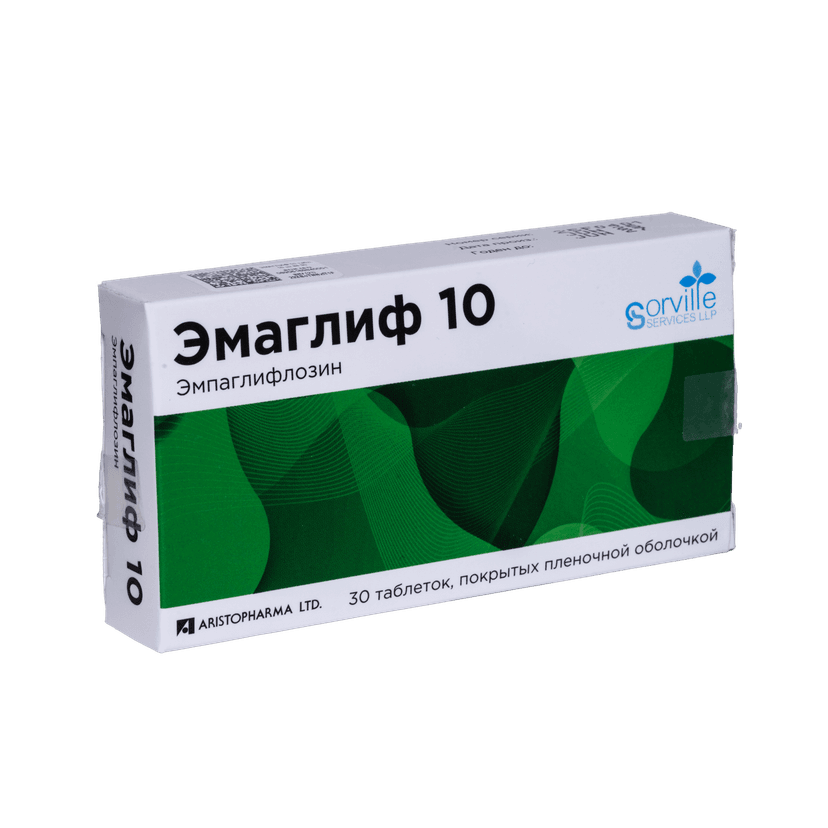
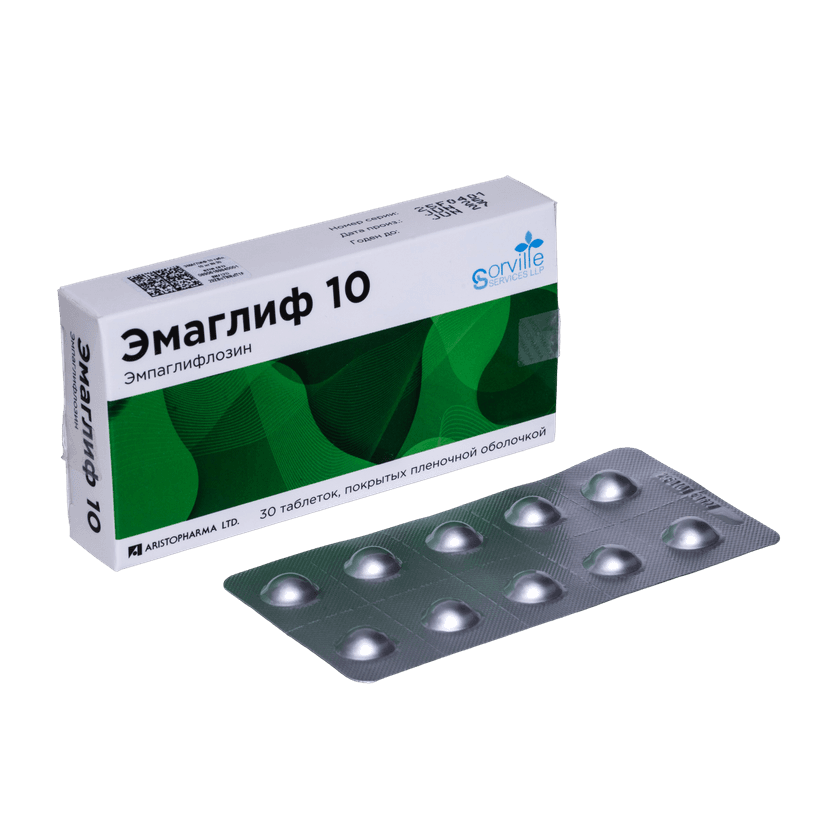
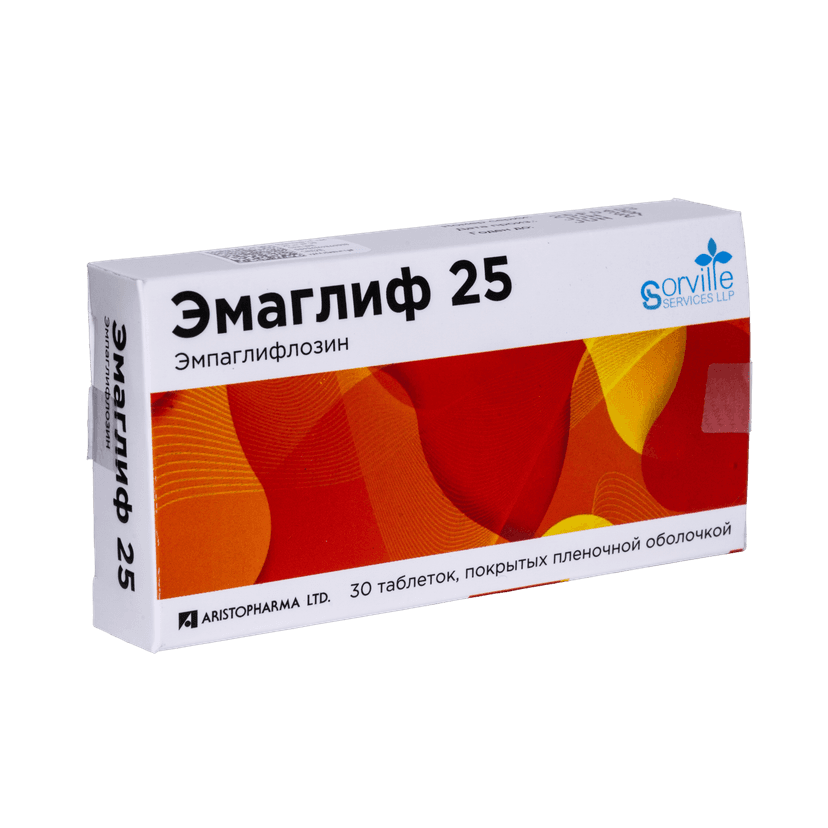
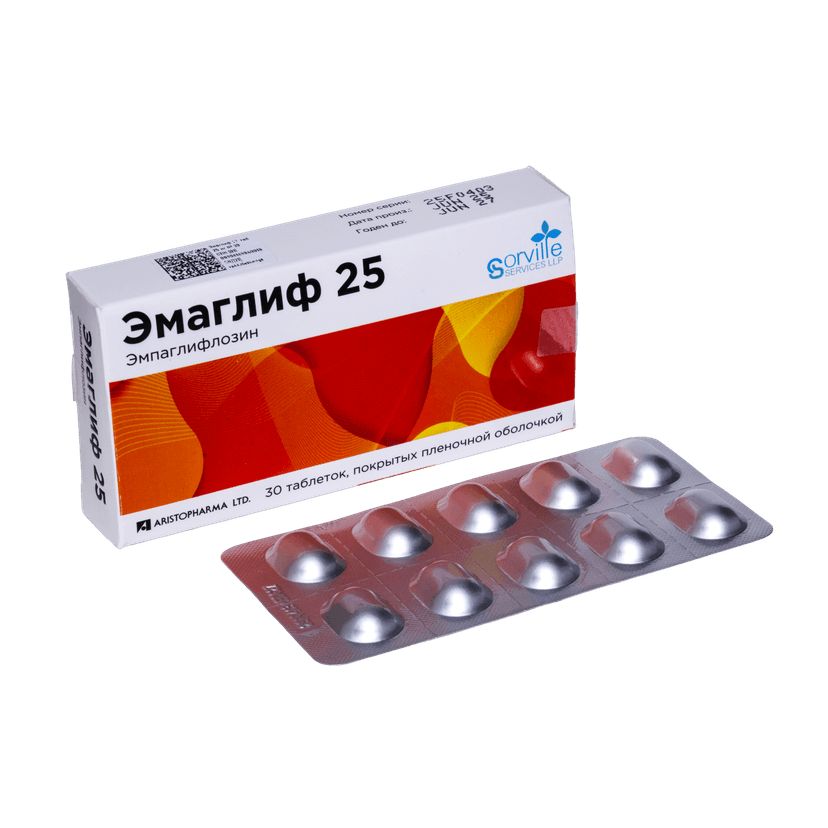
Composition: Each film-coated tablet contains: Emaglif 10 tablets: active ingredient: empagliflozin 10 mg. Excipients: lactose, microcrystalline cellulose, low-substituted hydroxypropyl methylcellulose, lemon yellow colour, croscarmellose sodium, colloidal anhydrous silicon dioxide (Aerosil), magnesium stearate. Film coating: Opadry 200 White (200F280000), Opadry II Yellow (85G82822). Emaglif 25 tablets: active ingredient: empagliflozin 25 mg. Excipients: lactose, microcrystalline cellulose, low-substituted hydroxypropyl methylcellulose, croscarmellose sodium, colloidal anhydrous silicon dioxide (Aerosil), magnesium stearate. Film coating: Opadry 200 White (200F280000), Opadry II Yellow (85G82822).
Form: Film-coated tablets
Indications: Type 2 diabetes in adults, as an adjunct to diet and exercise to improve glycaemic control: • Initial combination treatment with metformin when appropriate. • Monotherapy in patients with inadequate glycaemic control when metformin cannot be used due to intolerance. • Combination with other oral hypoglycaemic medicines: sulphonylureas (including with metformin), thiazolidinediones, dipeptidyl peptidase-4 (DPP-4) inhibitors (including with metformin), when glycaemic control on that treatment is inadequate. • Combination with insulin (including with one or two oral hypoglycaemic medicines) when glycaemic control on that treatment is inadequate. Type 2 diabetes in adults with established cardiovascular disease and/or chronic kidney disease and at least two high cardiovascular risk factors*, in combination with standard cardiac treatment, to reduce cardiovascular mortality or hospitalisation for heart failure. *Coronary heart disease (history of myocardial infarction, coronary artery bypass surgery); history of ischaemic or haemorrhagic stroke; peripheral artery disease, symptomatic or asymptomatic; dyslipidaemia; arterial hypertension; smoking.
Contraindications: • Hypersensitivity to the components. • Type 1 diabetes. • Diabetic ketoacidosis. • Rare hereditary disorders: lactase deficiency, lactose intolerance, glucose-galactose malabsorption. • Renal impairment with persistent GFR <45 ml/min/1.73 m². • Pregnancy and breastfeeding. • Age over 85 years. • Children under 18 years, due to insufficient efficacy and safety data.
Dosage: Take orally at any time of day, with or without food. Swallow without chewing, with water. Monotherapy or combination treatment: the recommended initial dose is 10 mg (one 10 mg tablet) once daily. If 10 mg daily does not provide adequate glycaemic control, increase to 25 mg (one 25 mg tablet) once daily. The maximum daily dose is 25 mg. Combination treatment: the recommended Emaglif dose is 10 mg once daily with metformin, sulphonylureas (including with metformin), thiazolidinediones, DPP-4 inhibitors (including with metformin), or insulin (including with one or two oral hypoglycaemic medicines). To reduce the risk of hypoglycaemia with combination treatment, reducing the dose of other hypoglycaemic medicines may be required.
Side effects: Common — genital infections (vaginal candidiasis, balanitis), urinary tract infections, frequent urination; uncommon — hypovolemia, hypotension; very common (with sulfonylureas or insulin) — hypoglycemia; common — skin itching.
Interactions: May enhance the effects of thiazide and loop diuretics (risk of dehydration), and hypoglycemia risk when combined with insulin or sulfonylureas (adjust their dose if needed).
Warnings: In elderly patients (>75 years), the risk of dehydration and urinary tract infections is increased. Use with caution if signs of dehydration or significant fluid loss are present.
Age restrictions: 18 to 85 years
Pregnancy: Contraindicated during pregnancy and breastfeeding.
Country of origin: Bangladesh
Manufacturer: ARISTOPHARMA LTD.
Storage conditions: Store in a dry, light-protected place at temperatures up to 30°C. Do not freeze. Keep out of reach of children.
Endocrinology, 2023
Authors: A.M. Mkrtumyan, L.V. Egshatyan
ReadDiabetes Mellitus, 2017
Authors: A.I. Korbut, V.V. Klimontov
ReadRussian Journal of Cardiology, 2020
Authors: G.P. Arutyunov, A.G. Arutyunov, E.I. Tarlovskaya, A.S. Ametov, N.G. Vinogradova, A.A. Garganeeva, M.G. Glezer, I.V. Zhirov, M.V. Ilyin, N.A. Koziolova, A.O. Konradi, A.Yu. Lebedeva, Yu.M. Lopatin, S.V. Nedogoda, V.V. Salukhov, M.Yu. Sitnikova, S.N. Tereshchenko, S.N. Tolstov, Yu.Sh. Khalimov, N.R. Khasanov, A.I. Chesnikova, V. Giga, M. Packer, D. Burkhardt
Read