
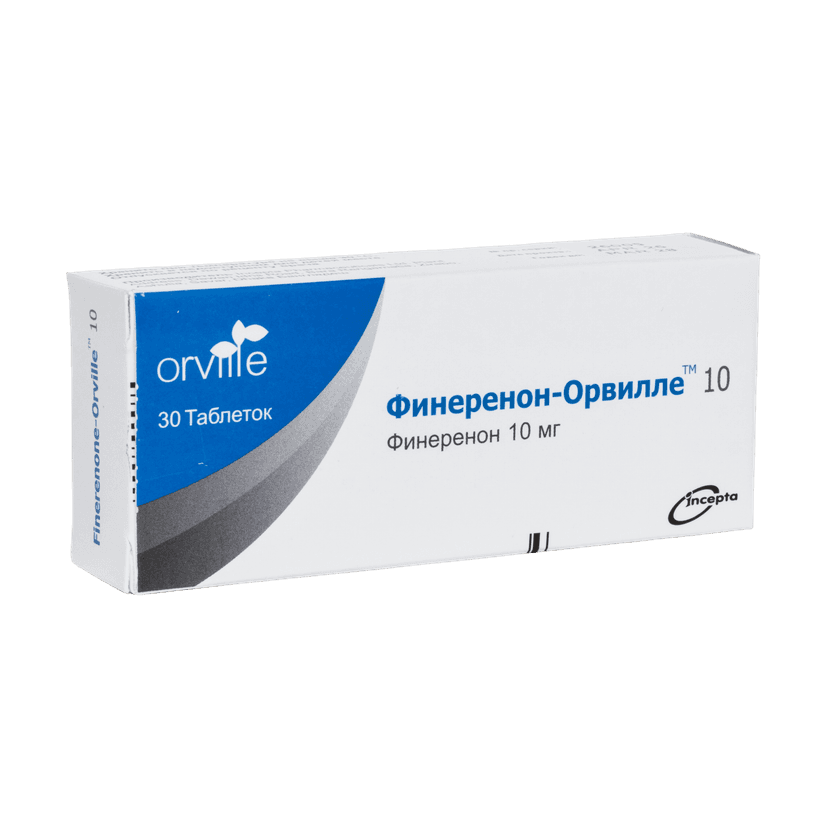
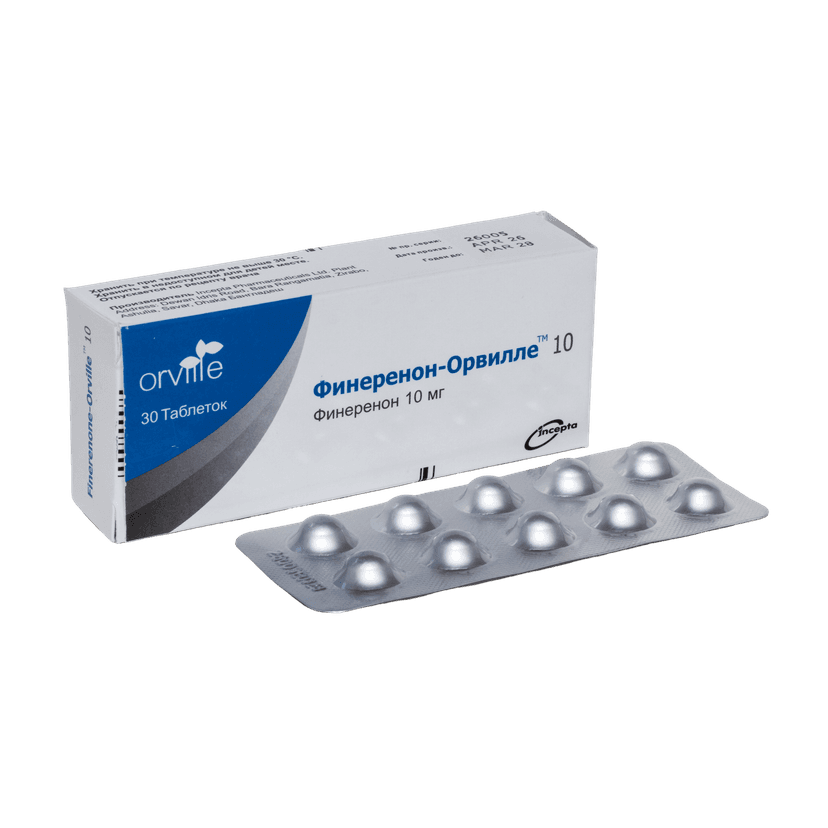
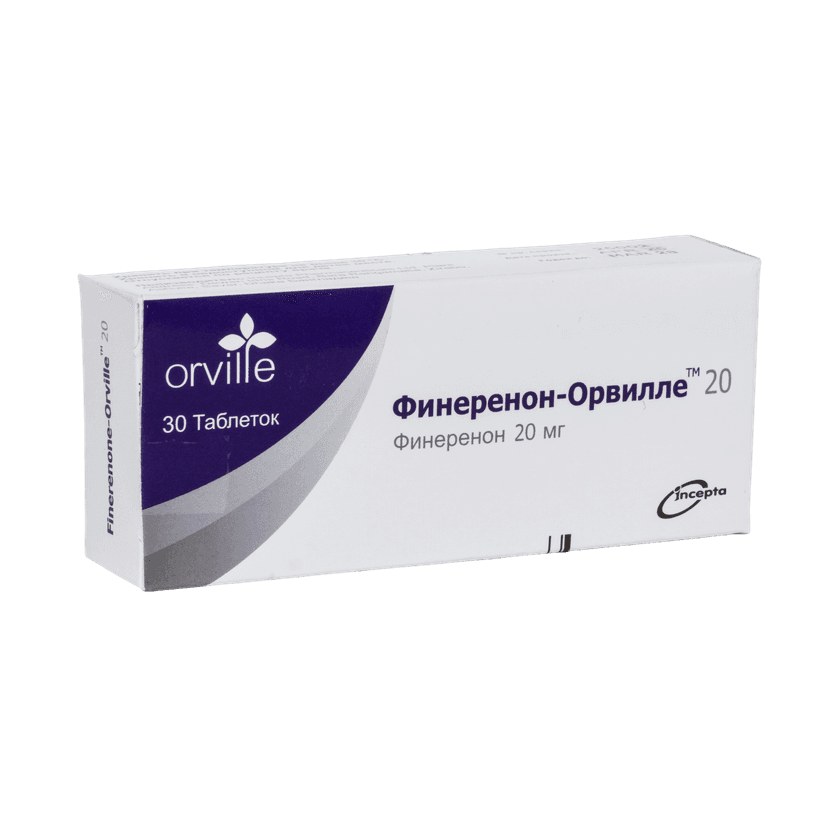
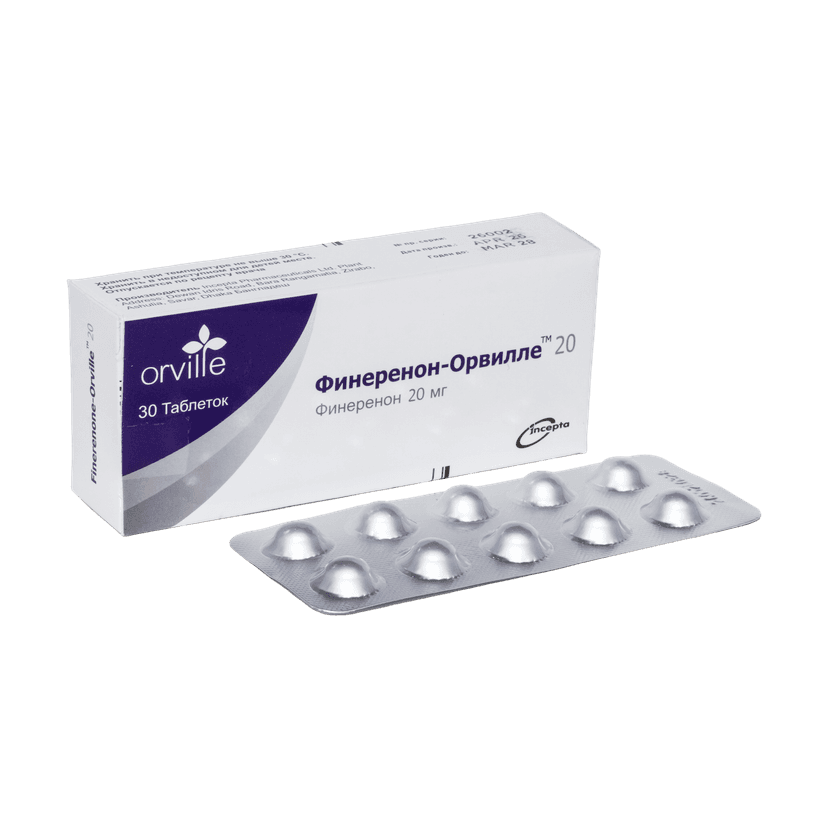
Composition: Active ingredient: finerenone 10 mg, 20 mg. Excipients: microcrystalline cellulose (101), lactose monohydrate (fine), croscarmellose sodium, hypromellose (5 cP)/hydroxypropyl methylcellulose (5 cP), sodium lauryl sulphate, magnesium stearate, Opadry 20B180001 White, red iron oxide, purified water.
Form: Film-coated tablets
Indications: Reduction of the risk of sustained eGFR decline, end-stage kidney disease, cardiovascular death, non-fatal myocardial infarction, and hospitalization for heart failure in adult patients with chronic kidney disease associated with type 2 diabetes.
Contraindications: • Hypersensitivity to the active ingredient or any excipient. • Concomitant treatment with strong CYP3A4 inhibitors, for example itraconazole, ketoconazole, ritonavir, nelfinavir, clarithromycin and others. • Addison’s disease.
Dosage: The recommended target and maximum dose is finerenone 20 mg once daily, with or without food. Measure serum potassium and estimated glomerular filtration rate (eGFR) to decide whether treatment can start and select the initial dose. • Potassium ≤4.8 mmol/l: treatment may start. • Potassium >4.8 to 5.0 mmol/l: initiation may be considered with additional potassium monitoring during the first 4 weeks according to the patient’s characteristics and potassium level. • Potassium >5.0 mmol/l: do not start treatment. Initial dose by eGFR (ml/min/1.73 m²): ≥60: 20 mg once daily. ≥25 to <60: 10 mg once daily. <25: not recommended. Continuation: remeasure potassium and eGFR 4 weeks after starting, restarting or increasing the dose; thereafter monitor potassium periodically as required. Dose adjustment according to the supplied table: • Potassium <4.8 mmol/l: increase 10 mg to 20 mg daily, or continue 20 mg daily. Keep 10 mg if eGFR has fallen by more than 30% from the previous measurement. • Potassium >4.8 to 5.5 mmol/l: continue the current 10 mg or 20 mg daily dose. • Potassium >5.5 mmol/l: stop treatment; consider restarting at 10 mg once daily when potassium is ≤5.0 mmol/l (for a previous 20 mg dose, restart at 10 mg). The table in the supplied document does not specify the boundary value of exactly 4.8 mmol/l in its continuation rows. A small initial fall in eGFR may occur during the first 4 weeks and then stabilise. Missed dose: take it as soon as remembered, but only on the same day. Do not take two doses to make up for one missed. Safety and efficacy in patients under 18 have not been established. No overall safety or efficacy differences were observed between older and younger patients; no dose adjustment is required in older patients.
Side effects: Hyperkalemia, hypotension, hyponatremia.
Interactions: Do not use together with potassium-sparing diuretics or other mineralocorticoid receptor antagonists. Use with caution and monitor serum potassium when combined with potassium supplements, trimethoprim, or trimethoprim/sulfamethoxazole.
Warnings: Serum potassium and eGFR should be assessed before treatment. Therapy should not be started if serum potassium is above 5.0 mmol/L. Potassium should be monitored regularly during treatment; if it rises above 5.5 mmol/L, therapy should be temporarily interrupted.
Age restrictions: Adults 18 years and older only.
Pregnancy: There are no data on finerenone use during pregnancy. No data are available on the presence of finerenone or its metabolites in breast milk, its effects on the breastfed infant, or its effects on milk production.
Country of origin: Bangladesh
Manufacturer: Incepta Pharmaceuticals Ltd.
Storage conditions: Store below 30 °C. Keep out of reach of children.