
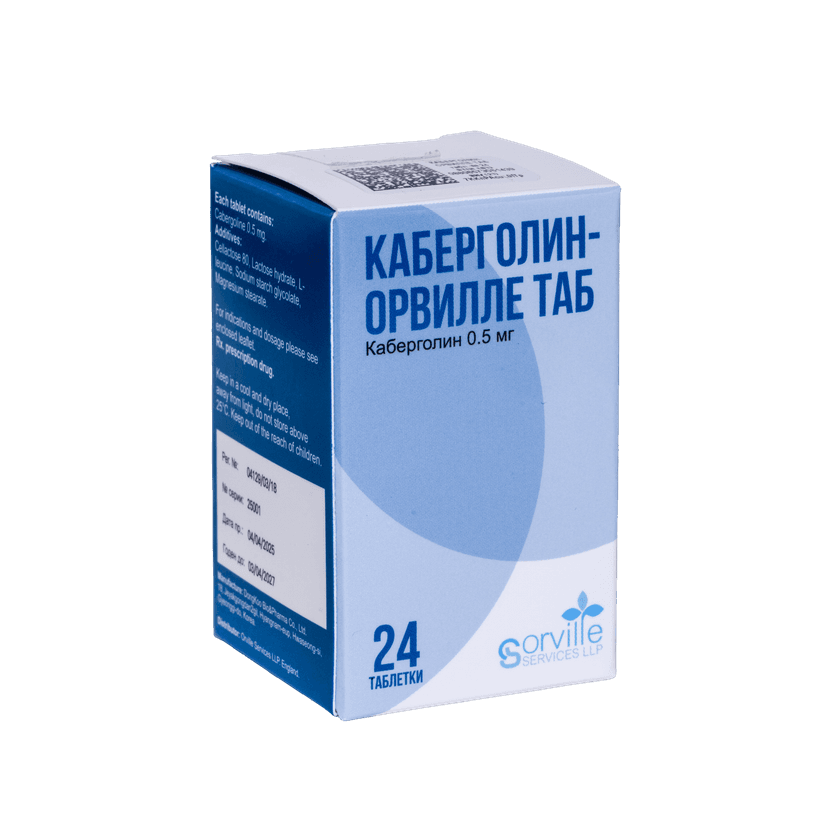
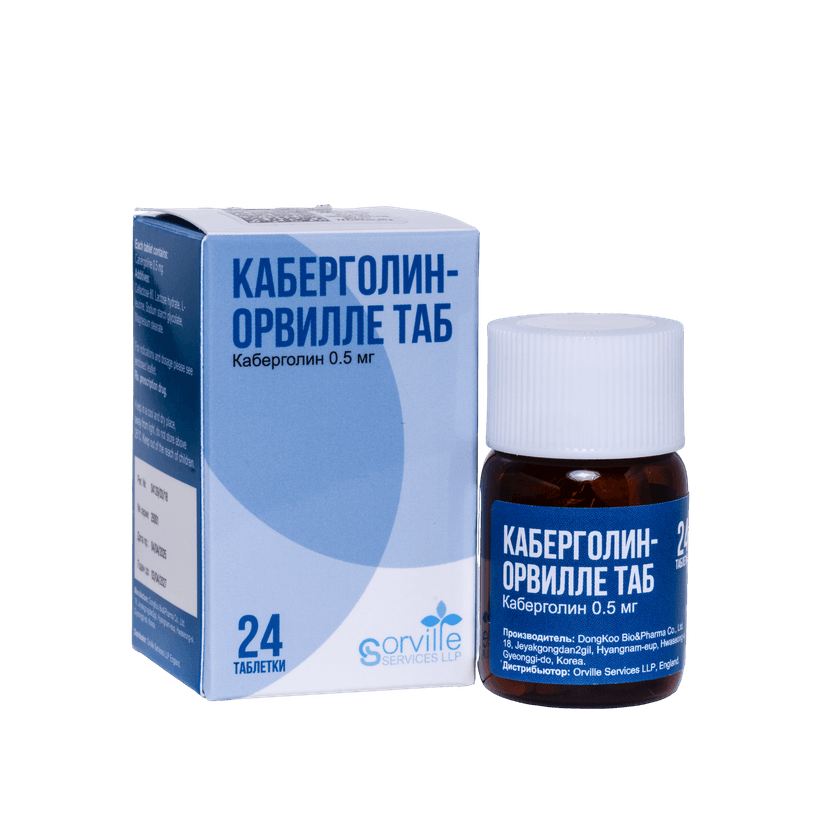
Composition: Each tablet contains: active ingredient: cabergoline 0.5 mg. Excipients: Cellactose 80, lactose hydrate, leucine, sodium starch glycolate, magnesium sulphate.
Form: Tablets
Indications: • Prevention of physiological lactation after childbirth. • Suppression of postpartum lactation. • Treatment of disorders associated with hyperprolactinaemia, including amenorrhoea, oligomenorrhoea, anovulation and galactorrhoea. • Prolactin-secreting pituitary adenomas (micro- and macroprolactinomas), idiopathic hyperprolactinaemia, and empty sella syndrome associated with hyperprolactinaemia.
Contraindications: • Hypersensitivity to cabergoline, other components or any ergot alkaloid. • Cardiac and respiratory dysfunction due to fibrotic changes or a history of such conditions. • For prolonged treatment: anatomical cardiac valvular pathology (narrowing or combined insufficiency and stenosis) confirmed by pretreatment echocardiography. • Age under 16 years: safety and efficacy are not established. • Lactose intolerance, lactase deficiency, glucose-galactose malabsorption. Use with caution: pregnancy-associated hypertension, such as pre-eclampsia or postpartum hypertension (only if benefit substantially outweighs risk); severe cardiovascular disease, Raynaud’s syndrome; peptic ulcer, gastrointestinal bleeding; severe hepatic impairment (lower doses recommended); severe psychiatric or cognitive disorders, including a history thereof; concomitant antihypertensive medicines because of the risk of orthostatic hypotension.
Dosage: Take orally with food. Stopping lactation: 1 mg once (two 0.5 mg tablets) on the first day after childbirth. Suppressing established lactation: 0.25 mg (1/2 tablet) twice daily every 12 hours for two days (total dose 1 mg). To reduce the risk of orthostatic hypotension in breastfeeding mothers, the single dose must not exceed 0.25 mg. Hyperprolactinaemia-associated disorders: initially 0.5 mg weekly, as one dose (one 0.5 mg tablet) or two doses (1/2 of a 0.5 mg tablet, for example on Monday and Thursday). Increase the weekly dose gradually by 0.5 mg at monthly intervals until the optimal effect is reached. The therapeutic dose is usually 1 mg weekly, but may range from 0.25 to 2 mg weekly. Maximum dose in hyperprolactinaemia: 4.5 mg weekly. Depending on tolerability, take the weekly dose once or divide it into two or more administrations. Divide doses above 1 mg weekly into several administrations. In patients highly sensitive to dopaminergic medicines, start lower, for example 0.25 mg once weekly, then increase gradually to the therapeutic dose. If marked adverse effects occur, temporarily reduce the dose and then increase gradually, for example by 0.25 mg per week every two weeks.
Side effects: Dizziness, headache, fatigue, drowsiness, depression, asthenia, paresthesia, fainting, nervousness, anxiety, insomnia, concentration problems; nausea, vomiting, epigastric pain, abdominal pain, constipation, dyspepsia, dry mouth, diarrhea, flatulence; palpitations, hypotension, orthostatic hypotension; mastodynia, dysmenorrhea, nosebleeds, rhinitis, hot flashes, temporary hemianopsia, vascular spasms, muscle cramps, visual impairment, flu-like symptoms, lethargy, orbital or peripheral edema, anorexia, acne, joint pain. Postmarketing: alopecia, elevated CPK, mania, dyspnea, edema, fibrosis, liver dysfunction, valvulopathy, pathological gambling, hypersexuality, aggression, psychiatric disorders, pericarditis, sudden sleep onset, weight changes, nasal congestion.
Interactions: Not recommended with dopamine antagonists (phenothiazines, butyrophenones, thioxanthenes, metoclopramide) or macrolides (erythromycin). Avoid prolonged use with other ergot alkaloids and antihypertensives.
Warnings: Before starting and every 6–12 months, conduct echocardiography to assess heart valves. Discontinue in case of fibrosis symptoms (pleura, pericardium, retroperitoneum) or valve issues. May cause orthostatic hypotension and sudden sleep onset. Use in pregnancy/lactation only if absolutely necessary under medical supervision.
Age restrictions: 16+
Pregnancy: Controlled studies in pregnant women have not been conducted. Use during pregnancy only when necessary, considering the benefit–risk balance for the woman and fetus. There are no data on excretion in breast milk. If treatment to stop or suppress lactation is ineffective, breastfeeding should be avoided. For hyperprolactinaemia-associated disorders, do not prescribe to mothers wishing to breastfeed.
Country of origin: South Korea
Manufacturer: Dongkoo Bio&Pharma Co., Ltd.
Storage conditions: Store at 1–30°C in a sealed container out of reach of children. Do not freeze.