
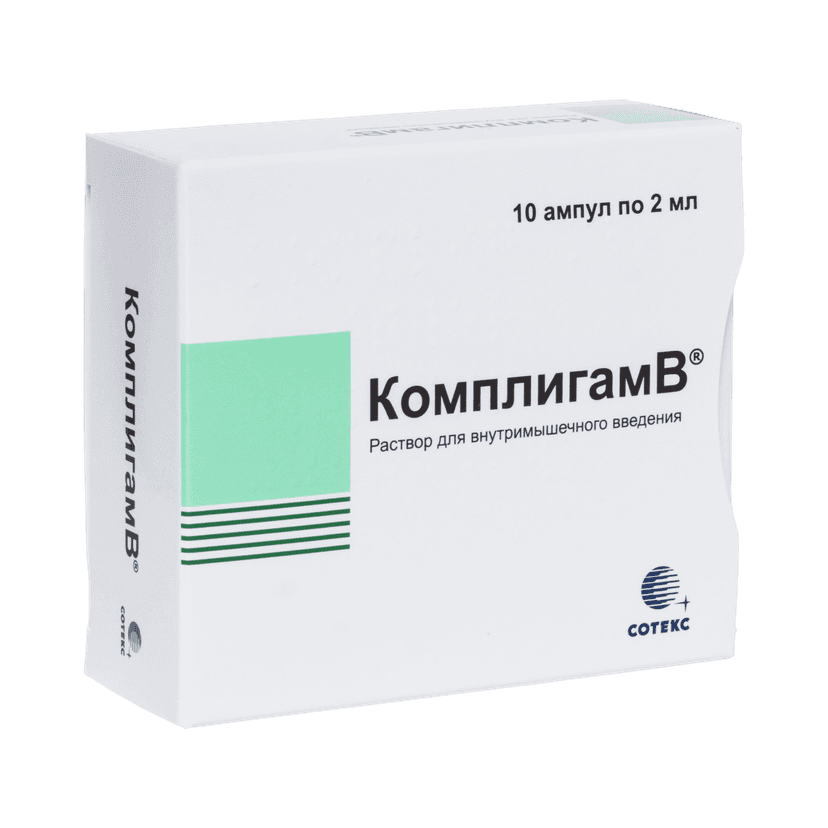
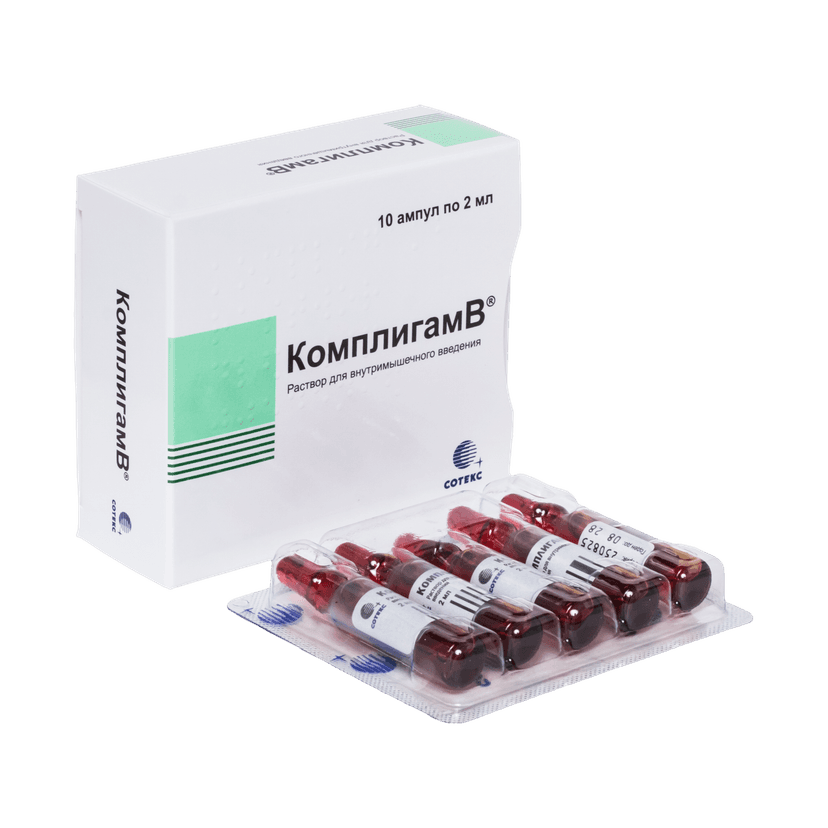
Composition: 1 ampoule (2 ml) contains: Active ingredients: thiamine hydrochloride 100 mg, pyridoxine hydrochloride 100 mg, cyanocobalamin 1 mg, lidocaine hydrochloride 20 mg. Excipients: benzyl alcohol, sodium polyphosphate, sodium tripolyphosphate, potassium hexacyanoferrate, sodium hydroxide 1 M solution, water for injections.
Form: Solution for intramuscular injection (2 ml)
Indications: As a pathogenetic and symptomatic treatment for nervous system diseases and syndromes of various origins: • Neuropathies and polyneuropathies (diabetic, alcoholic and others). • Neuritis and polyneuritis, including retrobulbar neuritis. • Peripheral paresis, including facial nerve paresis. • Neuralgia, including trigeminal and intercostal neuralgia. • Pain syndromes (radicular pain, myalgia). • Nocturnal muscle cramps, especially in older people. • Plexopathies and ganglionitis, including herpes zoster. • Neurological manifestations of spinal osteochondrosis (radiculopathy, lumboischialgia, muscular-tonic syndromes).
Contraindications: • Hypersensitivity to any component. • Severe and acute forms of decompensated chronic heart failure. • Childhood, due to lack of studies.
Dosage: For pronounced pain, it is advisable to start with deep intramuscular administration of 2 ml daily for 5–10 days, subsequently switching either to oral treatment or to less frequent injections (2–3 times weekly for 2–3 weeks).
Side effects: Allergic reactions (rash, itching, angioedema), rarely — tachycardia, excessive sweating.
Interactions: Thiamine is destroyed in solutions with sulfites and alkaline media; pyridoxine should not be used simultaneously with levodopa; lidocaine enhances the effect of adrenergic agents.
Warnings: Do not administer intravenously. Use during pregnancy and lactation is not recommended.
Age restrictions: From 18 years old
Pregnancy: Not recommended during pregnancy and lactation.
Country of origin: Russia
Manufacturer: Sotex
Storage conditions: Store at 2–8°C in a place protected from light; do not freeze.
Voronezh State Medical Academy named after N.N. Burdenko, 2011
Authors: S.P. Markin
ReadModern Rheumatology, 2010
Authors: T.A. Vygovskaya
ReadOutpatient Doctor’s Reference Guide, 2010
Authors: P.R. Kamchatnov
Read