
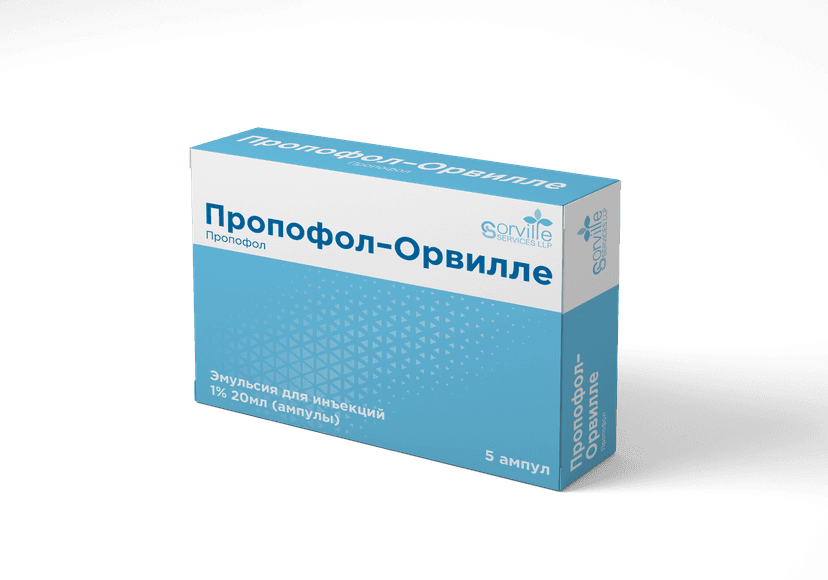
Composition: 1 ml contains: Active ingredient: Propofol-Orville 10.0 mg. Excipients: refined soybean oil, egg lecithin, glycerol, sodium hydroxide, water for injections.
Form: 1% Injectable Emulsion
Indications: Induction and maintenance of general anesthesia in adults and children over 3 years old; sedation in patients over 16 years old on mechanical ventilation in ICU; sedation during surgical and diagnostic procedures (adults and children from 3 years old).
Contraindications: Propofol-Orville must not be used in patients with a known allergy to Propofol-Orville or any ingredient, or with hypersensitivity to peanuts or soya. It must not be used for anaesthesia in patients under 3 years of age or for sedation in paediatric patients. It must not be used in pregnant or possibly pregnant women or during breastfeeding. Precautions: use cautiously in ASA risk classes III and IV, debilitated and elderly patients; circulatory or respiratory impairment and hypovolaemia; renal or hepatic impairment; epilepsy or a history of epilepsy; high intracranial pressure with low arterial pressure; a history of drug dependence or drug hypersensitivity; disorders of fat metabolism or other conditions requiring caution with lipid emulsions (see General precautions in the leaflet).
Dosage: Dosage and administration are individualized. Induction: 1.5–2.5 mg/kg in adults, up to 4 mg/kg in children; maintenance: 4–12 mg/kg/h in adults, 9–15 mg/kg/h in children. Intravenous use only in hospital settings.
Side effects: Hypotension, bradycardia, apnea, dizziness, seizures, nausea, vomiting, injection site pain, hypersalivation, rash, allergic reactions, rarely — rhabdomyolysis, metabolic acidosis, anaphylaxis.
Interactions: Enhances the effect of opioids, benzodiazepines, inhalational anesthetics; incompatible with alcohol. Risk of severe bradycardia when combined with succinylcholine. Do not use with cyclosporine — risk of leukoencephalopathy.
Warnings: Contraindicated during pregnancy and breastfeeding. Use with caution in debilitated patients, those with respiratory disorders, epilepsy, or lipid metabolism disorders. Requires continuous monitoring during administration.
Age restrictions: From 3 years old (only for anesthesia)
Pregnancy: Contraindicated during pregnancy and breastfeeding.
Country of origin: South Korea
Manufacturer: Dongkook Pharmaceutical Co., Ltd.
Storage conditions: Store at 2–25°C in a dry place, protected from light. Do not freeze. Keep out of reach of children.